 Add to Chrome
 Add to Firefox
 Add to Edge
Agent-as-Peer-Debriefer: A Multi-Agent Framework with Perspective-Based Refinement for Qualitative Analysis
May 23, 2026
Large language models (LLMs) are increasingly used for qualitative data analysis (QDA), yet their outputs often miss the depth and nuance of human analysis. We argue this gap reflects a missing credibility practice from human QDA: peer debriefing, in which an analyst seeks feedback from a disinterested peer and uses it to refine their coding. To bring this practice into LLM-assisted QDA, we propose Agent-as-Peer-Debriefer, a multi-agent QDA framework that builds peer debriefing into key coding steps. In our framework, a Hierarchical Coding Agent follows the standard QDA process to generate codes, sub-themes, and themes, along with self-explanations and reflection memos. It then shares these outputs with three Peer-Debriefing Agents, each applying a distinct analytical perspective (Theory-Driven, Data-Driven, or Applied) and refining the codes by keeping, renaming, reassigning, merging, or splitting them. These perspectives are drawn from established human QDA practices that generalize across domains and datasets. To evaluate the framework, we test it on three datasets across two domains with three LLMs, measuring semantic similarity to human-annotated codes. Across all settings, perspective-based, peer-debriefing refinement aligns more closely with human codes than a single-LLM baseline, and an ablation further shows the gain is not merely from additional refinement. The three perspectives also produce distinct trade-offs, showing that the choice of perspective is a meaningful and controllable design decision. More broadly, these findings suggest that simulating peer debriefing with explicit perspectives is a promising route to more credible LLM-assisted QDA.

Reading, Not Thinking: Understanding and Bridging the Modality Gap When Text Becomes Pixels in Multimodal LLMs
Mar 10, 2026Multimodal large language models (MLLMs) can process text presented as images, yet they often perform worse than when the same content is provided as textual tokens. We systematically diagnose this "modality gap" by evaluating seven MLLMs across seven benchmarks in five input modes, spanning both synthetically rendered text and realistic document images from arXiv PDFs to Wikipedia pages. We find that the modality gap is task- and data-dependent. For example, math tasks degrade by over 60 points on synthetic renderings, while natural document images often match or exceed text-mode performance. Rendering choices such as font and resolution are strong confounds, with font alone swinging accuracy by up to 47 percentage points. To understand this, we conduct a grounded-theory error analysis of over 4,000 examples, revealing that image mode selectively amplifies reading errors (calculation and formatting failures) while leaving knowledge and reasoning errors largely unchanged, and that some models exhibit a chain-of-thought reasoning collapse under visual input. Motivated by these findings, we propose a self-distillation method that trains the model on its own pure text reasoning traces paired with image inputs, raising image-mode accuracy on GSM8K from 30.71% to 92.72% and transferring to unseen benchmarks without catastrophic forgetting. Overall, our study provides a systematic understanding of the modality gap and suggests a practical path toward improving visual text understanding in multimodal language models.
FIRE-Bench: Evaluating Agents on the Rediscovery of Scientific Insights
Feb 02, 2026Autonomous agents powered by large language models (LLMs) promise to accelerate scientific discovery end-to-end, but rigorously evaluating their capacity for verifiable discovery remains a central challenge. Existing benchmarks face a trade-off: they either heavily rely on LLM-as-judge evaluations of automatically generated research outputs or optimize convenient yet isolated performance metrics that provide coarse proxies for scientific insight. To address this gap, we introduce FIRE-Bench (Full-cycle Insight Rediscovery Evaluation), a benchmark that evaluates agents through the rediscovery of established findings from recent, high-impact machine learning research. Agents are given only a high-level research question extracted from a published, verified study and must autonomously explore ideas, design experiments, implement code, execute their plans, and derive conclusions supported by empirical evidence. We evaluate a range of state-of-the-art agents with frontier LLMs backbones like gpt-5 on FIRE-Bench. Our results show that full-cycle scientific research remains challenging for current agent systems: even the strongest agents achieve limited rediscovery success (<50 F1), exhibit high variance across runs, and display recurring failure modes in experimental design, execution, and evidence-based reasoning. FIRE-Bench provides a rigorous and diagnostic framework for measuring progress toward reliable agent-driven scientific discovery.
What Is Seen Cannot Be Unseen: The Disruptive Effect of Knowledge Conflict on Large Language Models
Jun 06, 2025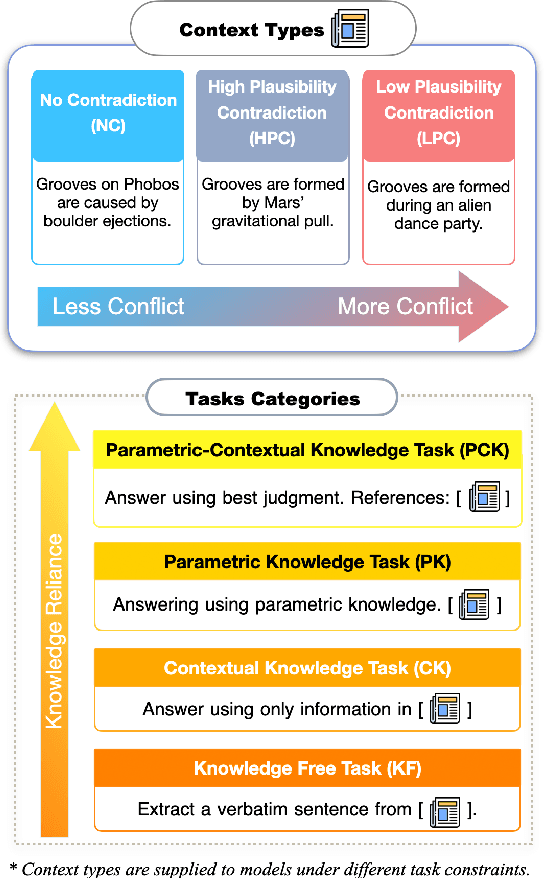
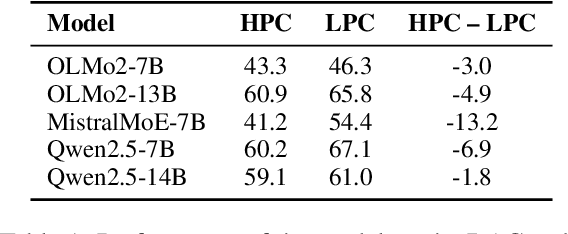
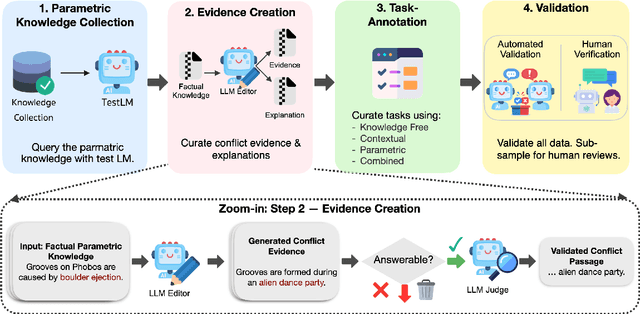
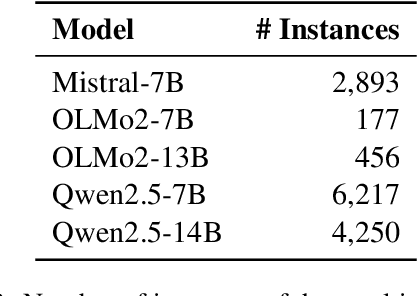
Large language models frequently rely on both contextual input and parametric knowledge to perform tasks. However, these sources can come into conflict, especially when retrieved documents contradict the model's parametric knowledge. We propose a diagnostic framework to systematically evaluate LLM behavior under context-memory conflict, where the contextual information diverges from their parametric beliefs. We construct diagnostic data that elicit these conflicts and analyze model performance across multiple task types. Our findings reveal that (1) knowledge conflict has minimal impact on tasks that do not require knowledge utilization, (2) model performance is consistently higher when contextual and parametric knowledge are aligned, (3) models are unable to fully suppress their internal knowledge even when instructed, and (4) providing rationales that explain the conflict increases reliance on contexts. These insights raise concerns about the validity of model-based evaluation and underscore the need to account for knowledge conflict in the deployment of LLMs.
Label-Guided In-Context Learning for Named Entity Recognition
May 29, 2025In-context learning (ICL) enables large language models (LLMs) to perform new tasks using only a few demonstrations. In Named Entity Recognition (NER), demonstrations are typically selected based on semantic similarity to the test instance, ignoring training labels and resulting in suboptimal performance. We introduce DEER, a new method that leverages training labels through token-level statistics to improve ICL performance. DEER first enhances example selection with a label-guided, token-based retriever that prioritizes tokens most informative for entity recognition. It then prompts the LLM to revisit error-prone tokens, which are also identified using label statistics, and make targeted corrections. Evaluated on five NER datasets using four different LLMs, DEER consistently outperforms existing ICL methods and approaches the performance of supervised fine-tuning. Further analysis shows its effectiveness on both seen and unseen entities and its robustness in low-resource settings.
Give me Some Hard Questions: Synthetic Data Generation for Clinical QA
Dec 05, 2024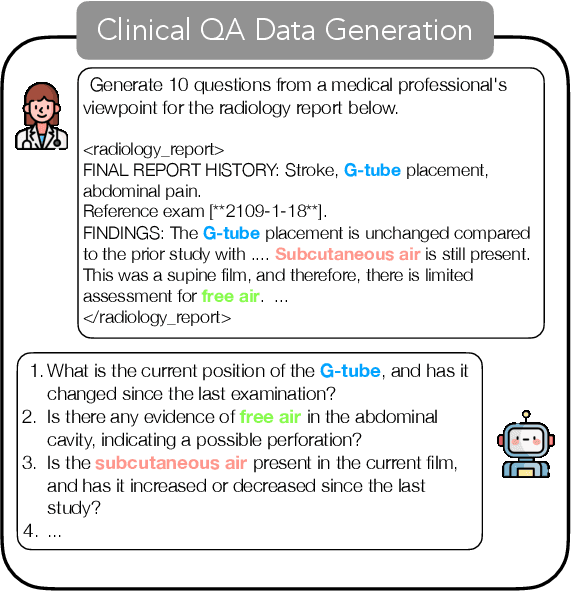
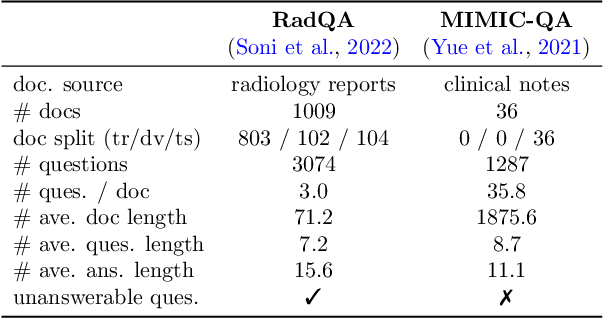
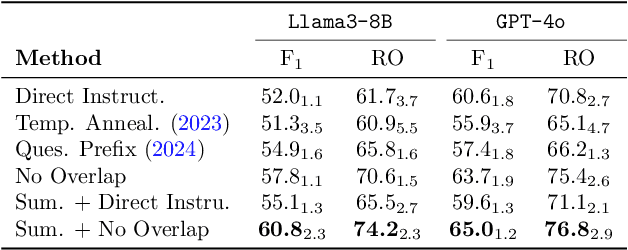
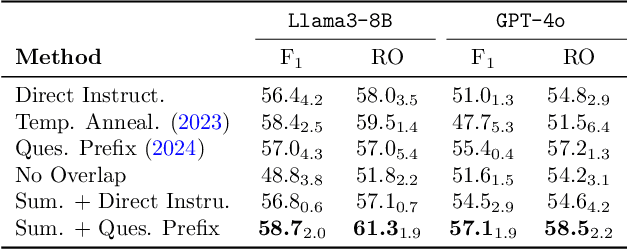
Clinical Question Answering (QA) systems enable doctors to quickly access patient information from electronic health records (EHRs). However, training these systems requires significant annotated data, which is limited due to the expertise needed and the privacy concerns associated with clinical data. This paper explores generating Clinical QA data using large language models (LLMs) in a zero-shot setting. We find that naive prompting often results in easy questions that do not reflect the complexity of clinical scenarios. To address this, we propose two prompting strategies: 1) instructing the model to generate questions that do not overlap with the input context, and 2) summarizing the input record using a predefined schema to scaffold question generation. Experiments on two Clinical QA datasets demonstrate that our method generates more challenging questions, significantly improving fine-tuning performance over baselines. We compare synthetic and gold data and find a gap between their training efficacy resulting from the quality of synthetically generated answers.
Touchstone Benchmark: Are We on the Right Way for Evaluating AI Algorithms for Medical Segmentation?
Nov 06, 2024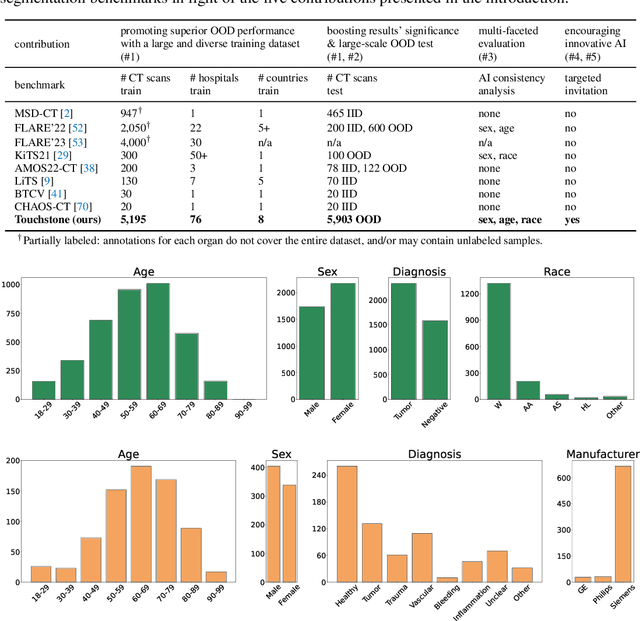
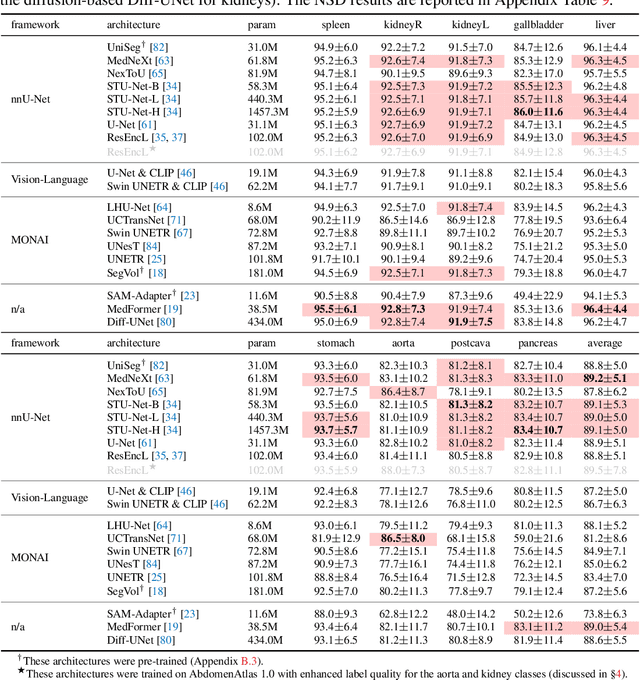

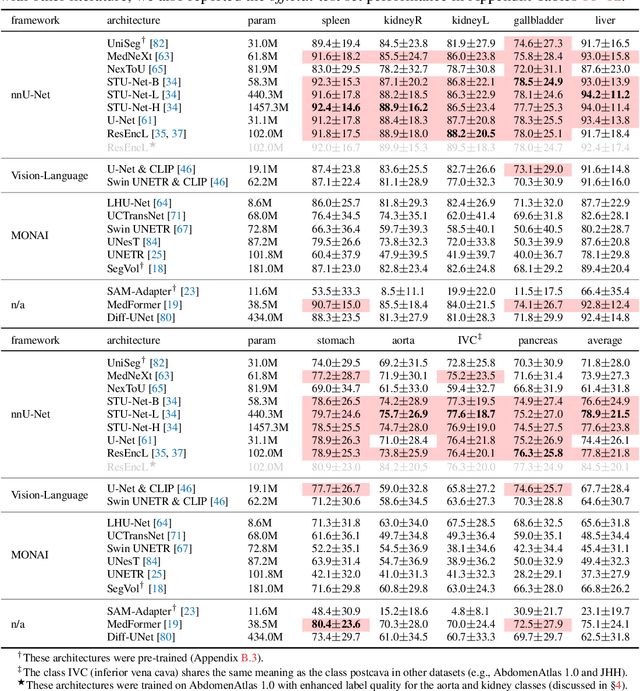
How can we test AI performance? This question seems trivial, but it isn't. Standard benchmarks often have problems such as in-distribution and small-size test sets, oversimplified metrics, unfair comparisons, and short-term outcome pressure. As a consequence, good performance on standard benchmarks does not guarantee success in real-world scenarios. To address these problems, we present Touchstone, a large-scale collaborative segmentation benchmark of 9 types of abdominal organs. This benchmark is based on 5,195 training CT scans from 76 hospitals around the world and 5,903 testing CT scans from 11 additional hospitals. This diverse test set enhances the statistical significance of benchmark results and rigorously evaluates AI algorithms across various out-of-distribution scenarios. We invited 14 inventors of 19 AI algorithms to train their algorithms, while our team, as a third party, independently evaluated these algorithms on three test sets. In addition, we also evaluated pre-existing AI frameworks--which, differing from algorithms, are more flexible and can support different algorithms--including MONAI from NVIDIA, nnU-Net from DKFZ, and numerous other open-source frameworks. We are committed to expanding this benchmark to encourage more innovation of AI algorithms for the medical domain.
M3D: Advancing 3D Medical Image Analysis with Multi-Modal Large Language Models
Mar 31, 2024


Medical image analysis is essential to clinical diagnosis and treatment, which is increasingly supported by multi-modal large language models (MLLMs). However, previous research has primarily focused on 2D medical images, leaving 3D images under-explored, despite their richer spatial information. This paper aims to advance 3D medical image analysis with MLLMs. To this end, we present a large-scale 3D multi-modal medical dataset, M3D-Data, comprising 120K image-text pairs and 662K instruction-response pairs specifically tailored for various 3D medical tasks, such as image-text retrieval, report generation, visual question answering, positioning, and segmentation. Additionally, we propose M3D-LaMed, a versatile multi-modal large language model for 3D medical image analysis. Furthermore, we introduce a new 3D multi-modal medical benchmark, M3D-Bench, which facilitates automatic evaluation across eight tasks. Through comprehensive evaluation, our method proves to be a robust model for 3D medical image analysis, outperforming existing solutions. All code, data, and models are publicly available at: https://github.com/BAAI-DCAI/M3D.
SAMv2: A Unified Framework for Learning Appearance, Semantic and Cross-Modality Anatomical Embeddings
Nov 28, 2023

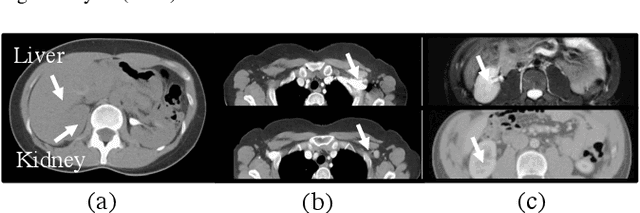

Identifying anatomical structures (e.g., lesions or landmarks) in medical images plays a fundamental role in medical image analysis. As an exemplar-based landmark detection method, Self-supervised Anatomical eMbedding (SAM) learns a discriminative embedding for each voxel in the image and has shown promising results on various tasks. However, SAM still faces challenges in: (1) differentiating voxels with similar appearance but different semantic meanings (\textit{e.g.}, two adjacent structures without clear borders); (2) matching voxels with similar semantics but markedly different appearance (e.g., the same vessel before and after contrast injection); and (3) cross-modality matching (e.g., CT-MRI registration). To overcome these challenges, we propose SAMv2, which is a unified framework designed to learn appearance, semantic, and cross-modality anatomical embeddings. Specifically, SAMv2 incorporates three key innovations: (1) semantic embedding learning with prototypical contrastive loss; (2) a fixed-point-based matching strategy; and (3) an iterative approach for cross-modality embedding learning. We thoroughly evaluated SAMv2 across three tasks, including one-shot landmark detection, lesion tracking on longitudinal CT scans, and CT-MRI affine/rigid registration with varying field of view. Our results suggest that SAMv2 outperforms SAM and other state-of-the-art methods, offering a robust and versatile approach for landmark based medical image analysis tasks. Code and trained models are available at: https://github.com/alibaba-damo-academy/self-supervised-anatomical-embedding-v2
SegVol: Universal and Interactive Volumetric Medical Image Segmentation
Nov 22, 2023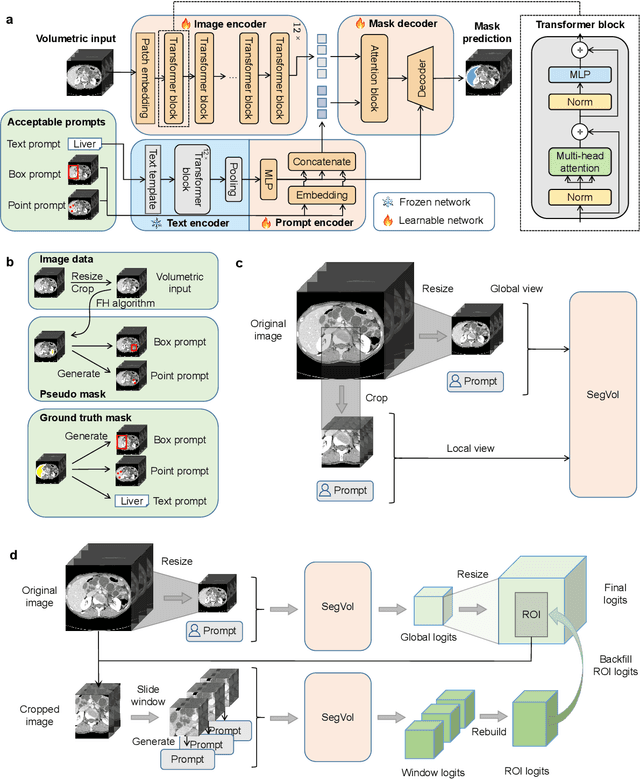
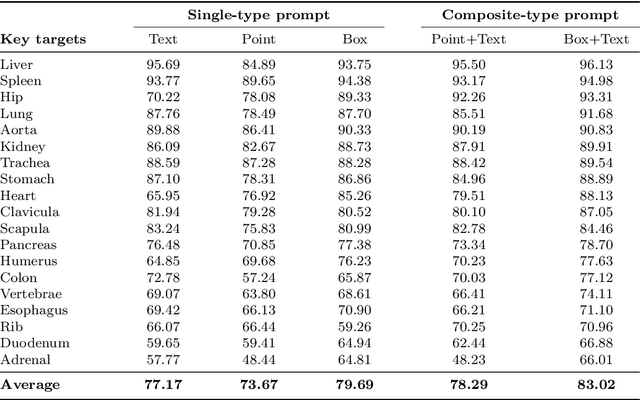
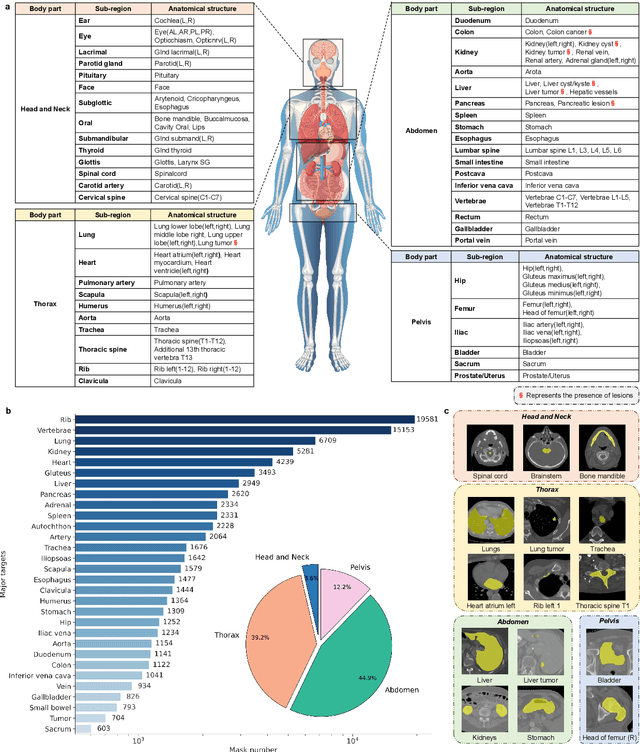
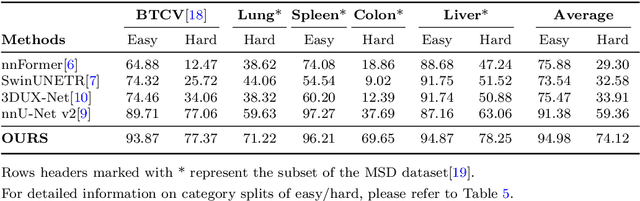
Precise image segmentation provides clinical study with meaningful and well-structured information. Despite the remarkable progress achieved in medical image segmentation, there is still an absence of foundation segmentation model that can segment a wide range of anatomical categories with easy user interaction. In this paper, we propose a universal and interactive volumetric medical image segmentation model, named SegVol. By training on 90k unlabeled Computed Tomography (CT) volumes and 6k labeled CTs, this foundation model supports the segmentation of over 200 anatomical categories using semantic and spatial prompts. Extensive experiments verify that SegVol outperforms the state of the art by a large margin on multiple segmentation benchmarks. Notably, on three challenging lesion datasets, our method achieves around 20% higher Dice score than nnU-Net. The model and data are publicly available at: https://github.com/BAAI-DCAI/SegVol.